大模型炼丹术(五):LLM自回归预训练过程详解
在前面的4篇文章中,我们已经完成了整个数据流向所需的模块构建,包括tokenizer,embedding,注意力机制,并串联得到了GPT2这个LLM架构。
现在,是时候准备开始训练我们的LLM了。
相比于前面发布的4篇文章,本文将更加偏重于代码实战。
一、准备自回归预训练数据集
在开始编写训练脚本之前,我们需要先构建训练所需数据集。这里使用the-verdict.txt,这是在本系列一开始就作为示例使用的一本书。
import os
import urllib.request

file_path = "the-verdict.txt"
url = "https://raw.githubusercontent.com/rasbt/LLMs-from-scratch/main/ch02/01_main-chapter-code/the-verdict.txt"

ifnot os.path.exists(file_path):
with urllib.request.urlopen(url) as response:
        text_data = response.read().decode('utf-8')
with open(file_path, "w", encoding="utf-8") as file:
        file.write(text_data)
else:
with open(file_path, "r", encoding="utf-8") as file:
        text_data = file.read()
现在有了原始数据,还需要用tokenizer进一步编码成token ID序列的形式。先把我们之前定义好的tokenizer搬过来:
import tiktoken
tokenizer = tiktoken.get_encoding("gpt2")

total_characters = len(text_data)
total_tokens = len(tokenizer.encode(text_data))

print("Characters:", total_characters)# 20479
print("Tokens:", total_tokens)# 5145
可以看到,这本书很小,总共包含20479个字符,使用BPE进行编码后,总共得到5145个token。
定义基本的编码解码函数:
deftext_to_token_ids(text, tokenizer):
    encoded = tokenizer.encode(text, allowed_special={'<|endoftext|>'})
    encoded_tensor = torch.tensor(encoded).unsqueeze(0) # add batch dimension
return encoded_tensor

deftoken_ids_to_text(token_ids, tokenizer):
    flat = token_ids.squeeze(0) # remove batch dimension
return tokenizer.decode(flat.tolist())
同样,我们在之前已经定义好了数据加载器,这里也直接搬过来:
from torch.utils.data import Dataset, DataLoader

classGPTDatasetV1(Dataset):
def__init__(self, txt, tokenizer, max_length, stride):
        self.input_ids = []
        self.target_ids = []

# Tokenize the entire text
        token_ids = tokenizer.encode(txt, allowed_special={"<|endoftext|>"})

# 这里的max_length就是上面所讲的滑动窗口的大小context_size
for i in range(0, len(token_ids) - max_length, stride):
            input_chunk = token_ids[i:i + max_length]
            target_chunk = token_ids[i + 1: i + max_length + 1]
            self.input_ids.append(torch.tensor(input_chunk))
            self.target_ids.append(torch.tensor(target_chunk))

def__len__(self):
return len(self.input_ids)

def__getitem__(self, idx):
return self.input_ids[idx], self.target_ids[idx]

defcreate_dataloader_v1(txt, batch_size=4, max_length=4,
                         stride=128, shuffle=True, drop_last=True,
                         num_workers=0):

# Initialize the tokenizer
    tokenizer = tiktoken.get_encoding("gpt2")

# Create dataset
    dataset = GPTDatasetV1(txt, tokenizer, max_length, stride)

# Create dataloader
    dataloader = DataLoader(
        dataset,
        batch_size=batch_size,
        shuffle=shuffle,
        drop_last=drop_last,
        num_workers=num_workers
    )

return dataloader
配置文件粘过来:
GPT_CONFIG_124M = {
"vocab_size": 50257,   # Vocabulary size
"context_length": 256, # Shortened context length (orig: 1024)
"emb_dim": 768,        # Embedding dimension
"n_heads": 12,         # Number of attention heads
"n_layers": 12,        # Number of layers
"drop_rate": 0.1,      # Dropout rate
"qkv_bias": False# Query-key-value bias
}
调用数据加载器来定义训练/验证loader:
# Train/validation ratio
train_ratio = 0.90
split_idx = int(train_ratio * len(text_data))
train_data = text_data[:split_idx]
val_data = text_data[split_idx:]

train_loader = create_dataloader_v1(
    train_data,
    batch_size=2,
    max_length=GPT_CONFIG_124M["context_length"],
    stride=GPT_CONFIG_124M["context_length"],# 不设置重叠token区域
    drop_last=True,
    shuffle=True,
    num_workers=0
)

val_loader = create_dataloader_v1(
    val_data,
    batch_size=2,
    max_length=GPT_CONFIG_124M["context_length"],
    stride=GPT_CONFIG_124M["context_length"],# 不设置重叠token区域
    drop_last=False,
    shuffle=False,
    num_workers=0
)
确保训练/验证集中至少包含一个样本(长度为context_size):
# Sanity check

if total_tokens * (train_ratio) < GPT_CONFIG_124M["context_length"]:
    print("Not enough tokens for the training loader. "
"Try to lower the `GPT_CONFIG_124M['context_length']` or "
"increase the `training_ratio`")

if total_tokens * (1-train_ratio) < GPT_CONFIG_124M["context_length"]:
    print("Not enough tokens for the validation loader. "
"Try to lower the `GPT_CONFIG_124M['context_length']` or "
"decrease the `training_ratio`")
查看数据集:
print("Train loader:")
for x, y in train_loader:
    print(x.shape, y.shape)

print("\nValidation loader:")
for x, y in val_loader:
    print(x.shape, y.shape)

print(len(train_loader))
print(len(val_loader))
输出:
Train loader:
torch.Size([2, 256]) torch.Size([2, 256])
torch.Size([2, 256]) torch.Size([2, 256])
torch.Size([2, 256]) torch.Size([2, 256])
torch.Size([2, 256]) torch.Size([2, 256])
torch.Size([2, 256]) torch.Size([2, 256])
torch.Size([2, 256]) torch.Size([2, 256])
torch.Size([2, 256]) torch.Size([2, 256])
torch.Size([2, 256]) torch.Size([2, 256])
torch.Size([2, 256]) torch.Size([2, 256])

Validation loader:
torch.Size([2, 256]) torch.Size([2, 256])
9
1
由此可知,在batch_size设置为2,context_length设置为256时,总共得到10个样本,这是一个相当小的数据集。
二、准备模型架构与损失函数
直接把我们在上一篇文章中定义的GPT2架构搬过来:
classGPTModel(nn.Module):
def__init__(self, cfg):
        super().__init__()
        self.tok_emb = nn.Embedding(cfg["vocab_size"], cfg["emb_dim"])
        self.pos_emb = nn.Embedding(cfg["context_length"], cfg["emb_dim"])
        self.drop_emb = nn.Dropout(cfg["drop_rate"])

        self.trf_blocks = nn.Sequential(
            *[TransformerBlock(cfg) for _ in range(cfg["n_layers"])])

        self.final_norm = LayerNorm(cfg["emb_dim"])
        self.out_head = nn.Linear(
            cfg["emb_dim"], cfg["vocab_size"], bias=False
        )

defforward(self, in_idx):
        batch_size, seq_len = in_idx.shape
        tok_embeds = self.tok_emb(in_idx)
        pos_embeds = self.pos_emb(torch.arange(seq_len, device=in_idx.device))
        x = tok_embeds + pos_embeds  # Shape [batch_size, num_tokens, emb_size]
        x = self.drop_emb(x)
        x = self.trf_blocks(x)
        x = self.final_norm(x)
        logits = self.out_head(x)
return logits

model = GPTModel(GPT_CONFIG_124M)
model.eval();  # Disable dropout during inference
使用交叉熵作为损失函数:
defcalc_loss_batch(input_batch, target_batch, model, device):
    input_batch, target_batch = input_batch.to(device), target_batch.to(device)
    logits = model(input_batch)
    print(logits.shape,target_batch.shape)# torch.Size([2, 256, 50257]) torch.Size([2, 256])
    loss = torch.nn.functional.cross_entropy(logits.flatten(0, 1), target_batch.flatten())
return loss

defcalc_loss_loader(data_loader, model, device, num_batches=None):
    total_loss = 0.
if len(data_loader) == 0:
return float("nan")
elif num_batches isNone:
        num_batches = len(data_loader)
else:
# Reduce the number of batches to match the total number of batches in the data loader
# if num_batches exceeds the number of batches in the data loader
        num_batches = min(num_batches, len(data_loader))
for i, (input_batch, target_batch) in enumerate(data_loader):
if i < num_batches:
            loss = calc_loss_batch(input_batch, target_batch, model, device)
            total_loss += loss.item()
else:
break
return total_loss / num_batches
在开始训练之前,可以先查看一下整体的训练和验证集的loss:
if torch.cuda.is_available():
   device = torch.device("cuda")
elif torch.backends.mps.is_available():
   device = torch.device("mps")
else:
   device = torch.device("cpu")

print(f"Using {device} device.")

model.to(device) # 对于 nn.Module 类的对象来说,model.to(device) 会直接修改原始的 model 对象,使其移动到指定的设备,而这个操作是就地修改的,不需要重新赋值给 model。

with torch.no_grad():
    train_loss = calc_loss_loader(train_loader, model, device)
    val_loss = calc_loss_loader(val_loader, model, device)

print("Training loss:", train_loss)# Training loss: 10.988969696892632
print("Validation loss:", val_loss)# Validation loss: 10.964568138122559
三、编写LLM自回归预训练循环
这部分代码也遵循PyTorch深度学习中的经典训练循环形式,代码非常简单,这里不再细说。
deftrain_model_simple(model, train_loader, val_loader, optimizer, device, num_epochs,
                       eval_freq, eval_iter, start_context, tokenizer):

    train_losses, val_losses, track_tokens_seen = [], [], []
    tokens_seen, global_step = 0, -1

for epoch in range(num_epochs):
        model.train()

for input_batch, target_batch in train_loader:
            optimizer.zero_grad()
            loss = calc_loss_batch(input_batch, target_batch, model, device)
            loss.backward()
            optimizer.step()
            tokens_seen += input_batch.numel() # Returns the total number of elements (or tokens) in the input_batch.
            global_step += 1

# Optional evaluation step
if global_step % eval_freq == 0:
                train_loss, val_loss = evaluate_model(
                    model, train_loader, val_loader, device, eval_iter)
                train_losses.append(train_loss)
                val_losses.append(val_loss)
                track_tokens_seen.append(tokens_seen)
                print(f"Ep {epoch+1} (Step {global_step:06d}): "
f"Train loss {train_loss:.3f}, Val loss {val_loss:.3f}")

# Print a sample text after each epoch
        generate_and_print_sample(
            model, tokenizer, device, start_context
        )

return train_losses, val_losses, track_tokens_seen

defevaluate_model(model, train_loader, val_loader, device, eval_iter):
    model.eval()
with torch.no_grad():
        train_loss = calc_loss_loader(train_loader, model, device, num_batches=eval_iter)
        val_loss = calc_loss_loader(val_loader, model, device, num_batches=eval_iter)
    model.train()
return train_loss, val_loss

defgenerate_and_print_sample(model, tokenizer, device, start_context):
    model.eval()
    context_size = model.pos_emb.weight.shape[0]
    encoded = text_to_token_ids(start_context, tokenizer).to(device)
with torch.no_grad():
        token_ids = generate_text_simple(
            model=model, idx=encoded,
            max_new_tokens=50, context_size=context_size
        )
    decoded_text = token_ids_to_text(token_ids, tokenizer)
    print(decoded_text.replace("\n", " "))  # Compact print format
    model.train()

defgenerate_text_simple(model, idx, max_new_tokens, context_size):
# idx 是 (batch, n_tokens) 形状的张量,表示当前上下文中的 Token 索引
for _ in range(max_new_tokens):

# 如果当前上下文长度超过模型支持的最大长度,则进行截断
# 例如,如果 LLM 只能支持 5 个 Token,而当前上下文长度是 10
# 那么只保留最后 5 个 Token 作为输入
        idx_cond = idx[:, -context_size:]

# 获取模型的预测结果
with torch.no_grad():  # 关闭梯度计算,加速推理
            logits = model(idx_cond)  # (batch, n_tokens, vocab_size)

# 只关注最后一个时间步的预测结果
# (batch, n_tokens, vocab_size) 变为 (batch, vocab_size)
        logits = logits[:, -1, :]

# 通过 Softmax 计算概率分布,后续文章将介绍其他方式
        probas = torch.softmax(logits, dim=-1)  # (batch, vocab_size)

# 选择概率最高的 Token 作为下一个 Token
        idx_next = torch.argmax(probas, dim=-1, keepdim=True)  # (batch, 1)

# 将新生成的 Token 追加到序列中
        idx = torch.cat((idx, idx_next), dim=1)  # (batch, n_tokens+1)

return idx  # 返回完整的 Token 序列
现在使用定义好的训练循环函数开始执行训练:
model = GPTModel(GPT_CONFIG_124M)
model.to(device)
optimizer = torch.optim.AdamW(model.parameters(), lr=0.0004, weight_decay=0.1)

num_epochs = 10
train_losses, val_losses, tokens_seen = train_model_simple(
    model, train_loader, val_loader, optimizer, device,
    num_epochs=num_epochs, eval_freq=5, eval_iter=5,
    start_context="Every effort moves you", tokenizer=tokenizer
)
训练日志如下:
Ep 1 (Step 000000): Train loss 9.817, Val loss 9.924
Ep 1 (Step 000005): Train loss 8.066, Val loss 8.332
Every effort moves you,,,,,,,,,,,,.
Ep 2 (Step 000010): Train loss 6.619, Val loss 7.042
Ep 2 (Step 000015): Train loss 6.046, Val loss 6.596
Every effort moves you, and,, and, and,,,,, and, and,,,,,,,,,,, and,, the,, the, and,, and,,, the, and,,,,,,
Ep 3 (Step 000020): Train loss 5.524, Val loss 6.508
Ep 3 (Step 000025): Train loss 5.369, Val loss 6.378
Every effort moves you, and to the of the of the picture. Gis.
Ep 4 (Step 000030): Train loss 4.830, Val loss 6.263
Ep 4 (Step 000035): Train loss 4.586, Val loss 6.285
Every effort moves you of the "I the picture.                    "I"I the picture"I had the picture"I the picture and I had been the picture of
Ep 5 (Step 000040): Train loss 3.879, Val loss 6.130
Every effort moves you know he had been his pictures, and I felt it's by his last word.                   "Oh, and he had been the end, and he had been
Ep 6 (Step 000045): Train loss 3.530, Val loss 6.183
Ep 6 (Step 000050): Train loss 2.960, Val loss 6.123
Every effort moves you know it was his pictures--I glanced after him, I had the last word.        "Oh, and I was his pictures--I looked.   "I looked. "I looked.
Ep 7 (Step 000055): Train loss 2.832, Val loss 6.150
Ep 7 (Step 000060): Train loss 2.104, Val loss 6.133
Every effort moves you know the picture to me--I glanced after him, and Mrs.  "I was no great, the fact, the fact that, the moment--as Jack himself, as his pictures--as of the picture--because he was a little
Ep 8 (Step 000065): Train loss 1.691, Val loss 6.186
Ep 8 (Step 000070): Train loss 1.391, Val loss 6.230
Every effort moves you?"  "Yes--quite insensible to the fact with a little: "Yes--and by me to me to have to see a smile behind his close grayish beard--as if he had the donkey. "There were days when I
Ep 9 (Step 000075): Train loss 1.059, Val loss 6.251
Ep 9 (Step 000080): Train loss 0.800, Val loss 6.278
Every effort moves you?"  "Yes--quite insensible to the fact with a laugh: "Yes--and by me!"  He laughed again, and threw back the window-curtains, I saw that, and down the room, and now
Ep 10 (Step 000085): Train loss 0.569, Val loss 6.373
Every effort moves you?"  "Yes--quite insensible to the irony. She wanted him vindicated--and by me!"  He laughed again, and threw back his head to look up at the sketch of the donkey. "There were days when I
我们给定的start_context是Every effort moves you
在最开始,模型只会输出Every effort moves you,,,,,,,,,,,,.
而到了最后一个epoch,模型输出了语法基本正确的句子:Every effort moves you?" "Yes--quite insensible to the irony. She wanted him vindicated--and by me!" He laughed again, and threw back his head to look up at the sketch of the donkey. "There were days when I
你可能会疑惑,预设的max_tokens不是50吗,这两次的测试输入都是Every effort moves,可是为什么输出的句子长度却不一样呢?
因为max_tokens=50指的是生成的token数量上限,而不是句子的字数或单词数。一个token可能是:
- 一个单词(例如 “donkey”)
- 一个子词(例如 “sketch” 可能被拆分为 [“sk”, “etch”])
- 一个标点符号(例如 “,”、“.” 可能单独算作 token)
随着训练的进行,模型的语言能力增强:
- 早期:模型可能随机输出大量逗号、“and” 等低信息量的 token,使得句子看起来短而混乱。
- 后期:模型学会了输出完整的单词、短语和句子,因此即使 max_tokens限制为50,生成的文本可能更连贯、信息密度更高,看起来更长。
最后来看一下loss: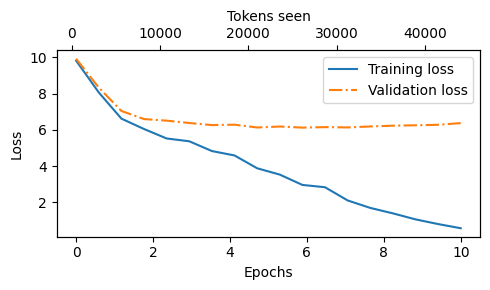
可以看到,整体的训练loss是下降的,但存在过拟合(验证集loss后期上升),这是因为我们所使用的数据集比较小,仅仅用于演示。
到这里,我们完成了LLM的预训练。模型已经掌握了基本的语言模式,但如何让它更好地生成高质量文本,还需要合理的解码策略。
在下一篇文章中,我们将深入探讨LLM的一些解码策略,并对这些策略的优缺点进行详细分析。敬请期待!
大模型算是目前当之无愧最火的一个方向了,算是新时代的风口!有小伙伴觉得,作为新领域、新方向人才需求必然相当大,与之相应的人才缺乏、人才竞争自然也会更少,那转行去做大模型是不是一个更好的选择呢?是不是更好就业呢?是不是就暂时能抵抗35岁中年危机呢?
答案当然是这样,大模型必然是新风口!
那如何学习大模型 ?
由于新岗位的生产效率,要优于被取代岗位的生产效率,所以实际上整个社会的生产效率是提升的。但是具体到个人,只能说是:
最先掌握AI的人,将会比较晚掌握AI的人有竞争优势。
这句话,放在计算机、互联网、移动互联网的开局时期,都是一样的道理。
但现在很多想入行大模型的人苦于现在网上的大模型老课程老教材,学也不是不学也不是,基于此我用做产品的心态来打磨这份大模型教程,深挖痛点并持续修改了近100余次后,终于把整个AI大模型的学习路线完善出来!

在这个版本当中:
您只需要听我讲,跟着我做即可,为了让学习的道路变得更简单,这份大模型路线+学习教程已经给大家整理并打包分享出来, 😝有需要的小伙伴,可以 扫描下方二维码领取🆓↓↓↓

一、大模型经典书籍(免费分享)
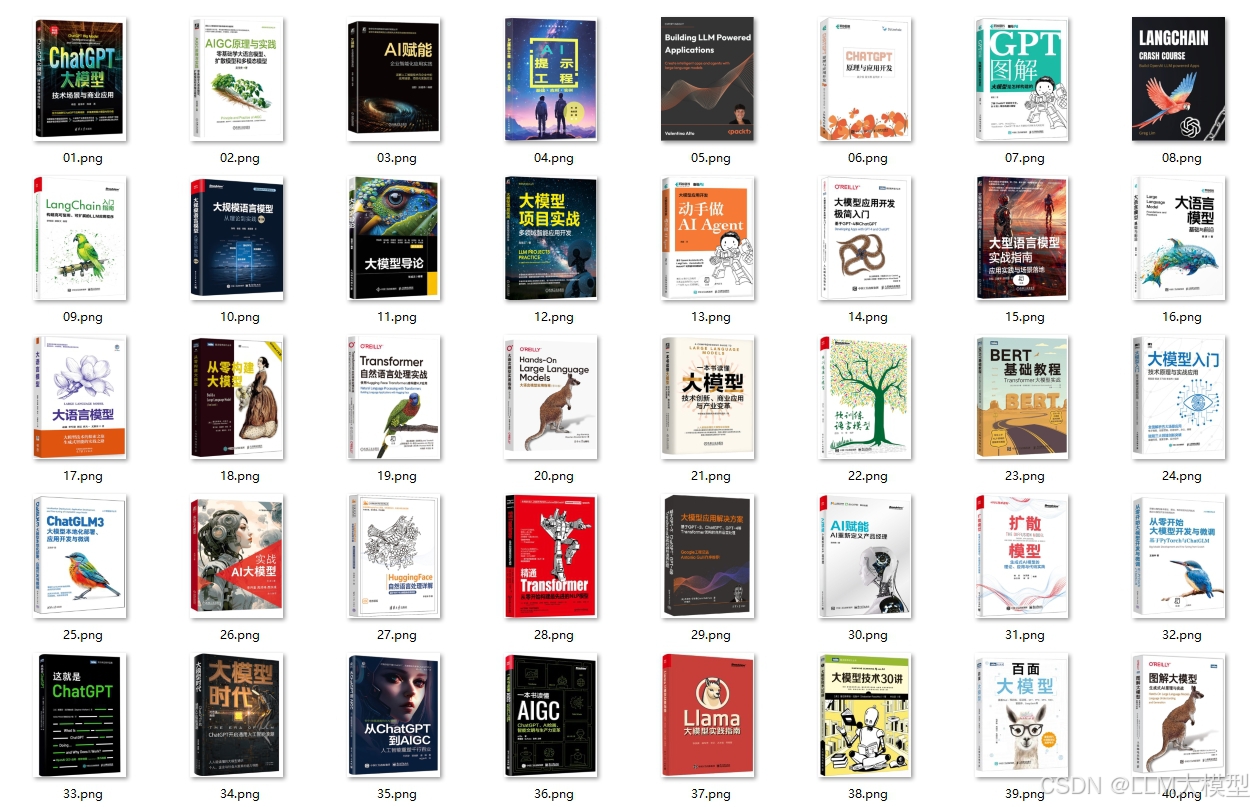
AI大模型已经成为了当今科技领域的一大热点,那以下这些大模型书籍就是非常不错的学习资源。
二、640套大模型报告(免费分享)
这套包含640份报告的合集,涵盖了大模型的理论研究、技术实现、行业应用等多个方面。无论您是科研人员、工程师,还是对AI大模型感兴趣的爱好者,这套报告合集都将为您提供宝贵的信息和启示。(几乎涵盖所有行业)

三、大模型系列视频教程(免费分享)

四、2025最新大模型学习路线(免费分享)
我们把学习路线分成L1到L4四个阶段,一步步带你从入门到进阶,从理论到实战。

L1阶段:启航篇丨极速破界AI新时代
L1阶段:了解大模型的基础知识,以及大模型在各个行业的应用和分析,学习理解大模型的核心原理、关键技术以及大模型应用场景。

L2阶段:攻坚篇丨RAG开发实战工坊
L2阶段:AI大模型RAG应用开发工程,主要学习RAG检索增强生成:包括Naive RAG、Advanced-RAG以及RAG性能评估,还有GraphRAG在内的多个RAG热门项目的分析。
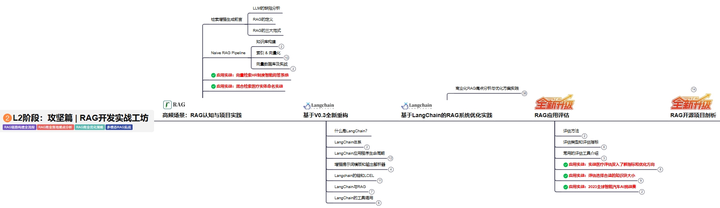
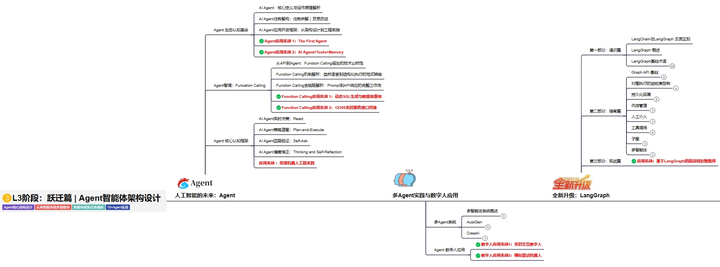
L3阶段:跃迁篇丨Agent智能体架构设计
L3阶段:大模型Agent应用架构进阶实现,主要学习LangChain、 LIamaIndex框架,也会学习到AutoGPT、 MetaGPT等多Agent系统,打造Agent智能体。
L4阶段:精进篇丨模型微调与私有化部署
L4阶段:大模型的微调和私有化部署,更加深入的探讨Transformer架构,学习大模型的微调技术,利用DeepSpeed、Lamam Factory等工具快速进行模型微调,并通过Ollama、vLLM等推理部署框架,实现模型的快速部署。
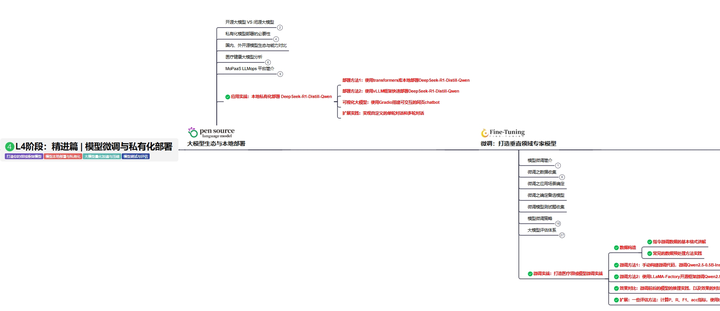
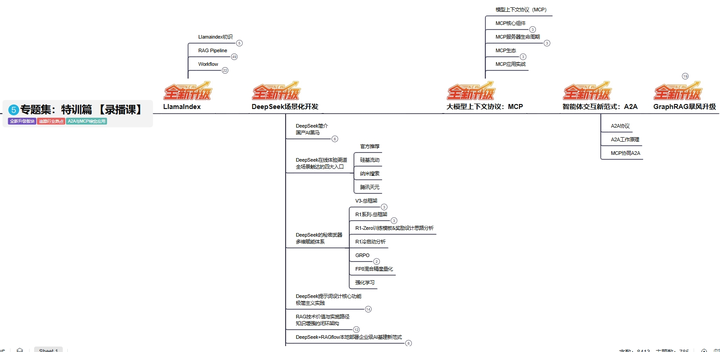
L5阶段:专题集丨特训篇 【录播课】
全套的AI大模型学习资源已经整理打包,有需要的小伙伴可以微信扫描下方二维码,免费领取

码道开发者社区,聚焦华为云码道 CodeArts 代码智能体,沉淀 Agent、Skill、鸿蒙开发实战内容,供开发者查阅资料、交流技术、分享工程实践
更多推荐


 5
5 0
0- 0


 已为社区贡献219条内容

所有评论(0)