【深度学习】lecture_3_Deep networks & backpropagation
Deep networks & backpropagation
Learning machines
“A computer program is said to learn from
experience E with respect to some class of
tasks T and performance measure P, if its
performance at tasks in T, as measured by P,
improves with experience E.” (Mitchell, 1997)
• Task T: e.g., classification, regression, density
estimation, etc.

• Performance measure P: e.g., accuracy, error rate

• Experience E: supervised, unsupervised,
reinforcement learning
Example: Linear regression!(线性回归)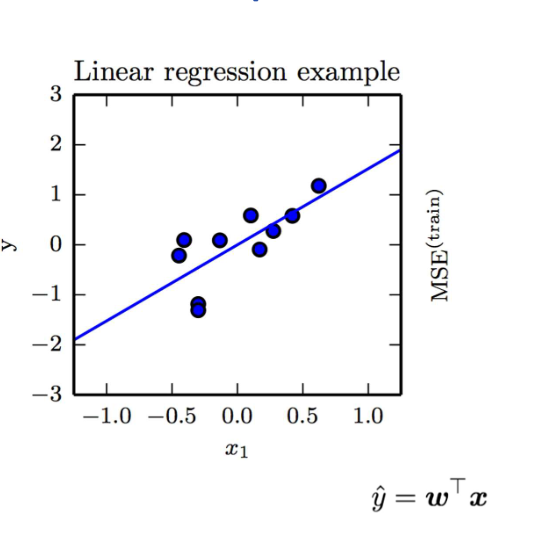
参数介绍:
x:输入变量

y:输出变量

w:权重

b:偏置项(当然这个图里没有展示)
Mean squared error: our performance measure
P(w,b) = 1/N ∑(y_i - (wx_i + b))^2
error/loss 介绍:
Training error:
 the error/loss computed on
the training set
Test error/loss:
the error/loss on the test set
Generalization error/loss: the gab between
the training error and test error
Underfitting(欠拟合) and overfitting(过拟合)
Generalisation(泛化)与 Capacity(容量)
一句话先记住:
容量是模型的“智商”,泛化是它“考试”时的得分;智商太高不复习,容易作弊背答案(过拟合),考试一换题库就挂。
Capacity(容量)
抽象说法:假设空间的大小,即模型能表示的函数集合的“丰富程度”。
Generalisation(泛化):
训练集误差 → 测试集误差的“落差”越小,泛化越好。
Perceptron(感知机)img-qyU5VCp8-1758808806238)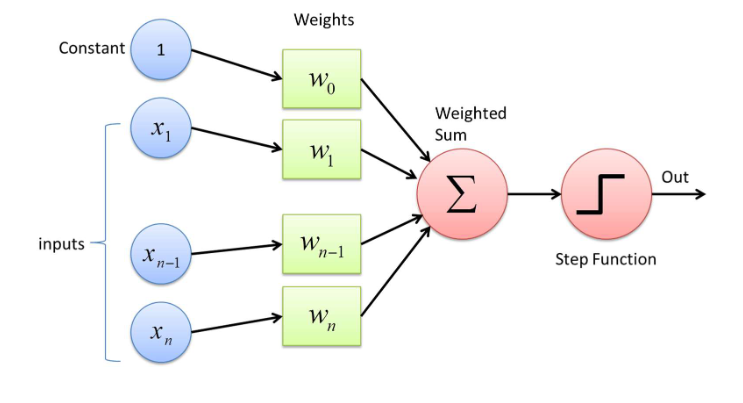
Going deep – Single Hidden Layer(该章节未具体介绍)
Deep neural networks(该章节未具体介绍)
Gradient-based learning:
backpropagation(反向传播):核心想,找到最合适的权重使得我的模型的误差最小化。
Cost functions: cross entropy(交叉熵损失函数)
记忆:yi是第i个样本的真实值(0/1),yi^是第i个样本的预测值(0~1)(如果默认归一化的话)
log(yi^)是一个负数,在前面加上一个符号变为正数
三种output:
-
Regression: 线性输出
-
Binary classification: sigmoid输出(用于激活函数来着)
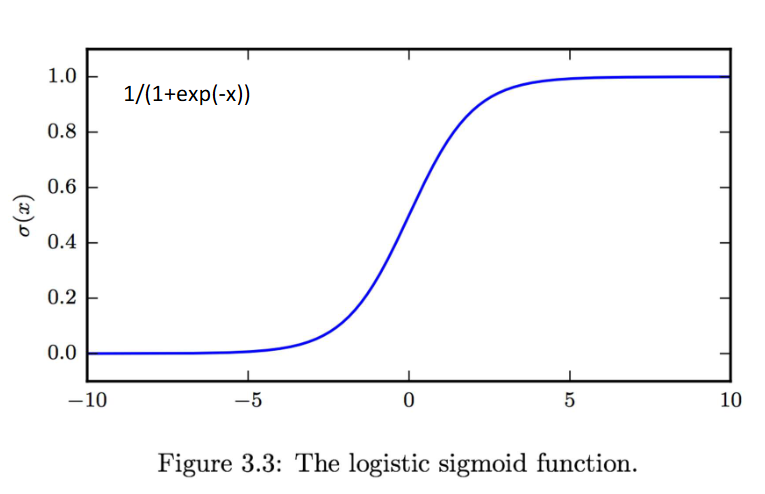
-
Multi-class classification: softmax输出(用于结果的输出)

Hidden units(注意梯度的计算公式):
ReLU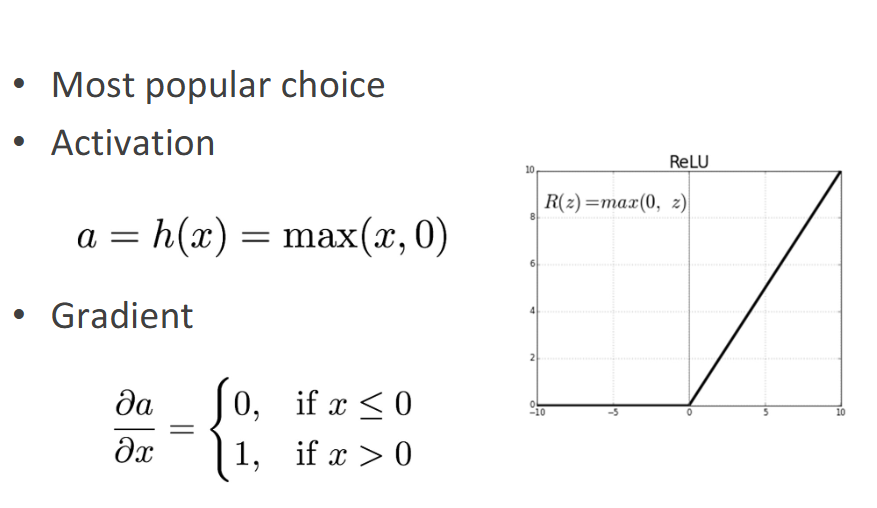
sigmoid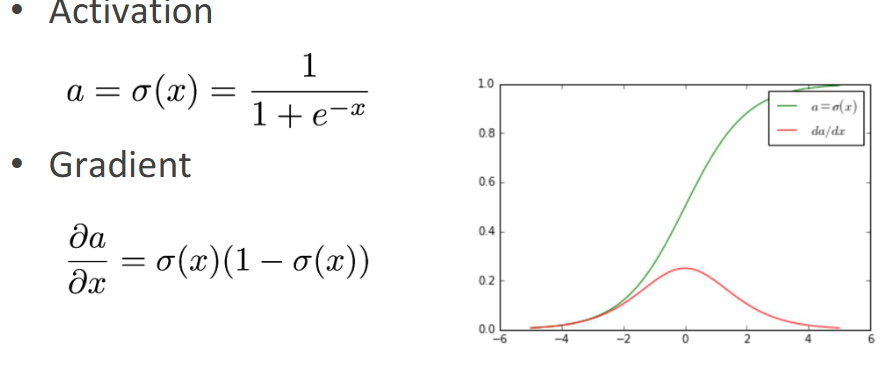
tanh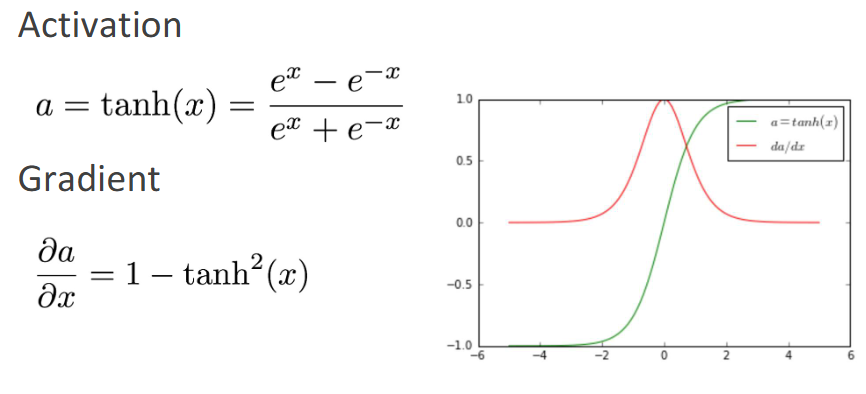
Architecture design
要思考的两个问题:
1. How many layers and units?
The more layers we have, the fewer units we
need

2.How many connections?

Usually a complete set but in certain domains
we can drop some
connections
反向传播和梯度下降:
主要的计算定理:
chain rule: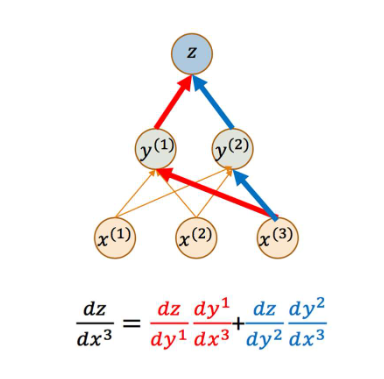
注意:z关于y的导数有的时候消不掉,要我们直接以隐函数的形式保留(高数内容)

码道开发者社区,聚焦华为云码道 CodeArts 代码智能体,沉淀 Agent、Skill、鸿蒙开发实战内容,供开发者查阅资料、交流技术、分享工程实践
更多推荐



 7
7 0
0- 0


 已为社区贡献7条内容

所有评论(0)