全球AI大模型 KWI 排行榜(2025年10月)【Grok版】

全球AI大模型 KWI 排行榜(2025年10月)【Grok版】
基于2025年最新AI大模型评估(如LMSYS Chatbot Arena、Artificial Analysis等leaderboard),本排行榜选取全球顶级10个AI大模型,进行KWI(贾子智慧指数)评估。为确保可比性,所有模型统一设定认知维度 n=5(对应高级推理与多模态任务难度)。使用默认参数(k=1, p=2, q=0.15, a=1.0)计算 D(n)=52.9250(难度固定)。能力 C 值基于模型的整体性能排名(如Elo分数或综合基准)进行合理估计与归一化(更高排名对应更高C),然后推断KWI。KWI 值越高,表示该模型在给定难度下的智慧表现越优(接近1为完胜)。排行按KWI降序排列。
|
排名 |
模型名称 |
n(认知维度) |
KWI |
D(n)(难度) |
推断 C(能力) |
|---|---|---|---|---|---|
|
1 |
GPT-5 (OpenAI) |
5 |
0.791 |
52.9250 |
200.000 |
|
2 |
DeepSeek R1 (DeepSeek) |
5 |
0.773 |
52.9250 |
180.000 |
|
3 |
Claude 4 Sonnet (Anthropic) |
5 |
0.763 |
52.9250 |
170.000 |
|
4 |
Grok-4 (xAI) |
5 |
0.757 |
52.9250 |
165.000 |
|
5 |
Llama 4 (Meta) |
5 |
0.751 |
52.9250 |
160.000 |
|
6 |
Gemini 2 (Google) |
5 |
0.745 |
52.9250 |
155.000 |
|
7 |
Mistral Large 3 (Mistral) |
5 |
0.739 |
52.9250 |
150.000 |
|
8 |
Qwen 3 (Alibaba) |
5 |
0.733 |
52.9250 |
145.000 |
|
9 |
Command R+ (Cohere) |
5 |
0.726 |
52.9250 |
140.000 |
|
10 |
Phi-3 (Microsoft) |
5 |
0.718 |
52.9250 |
135.000 |
解读与说明
- 计算依据:KWI = σ(a · log(C / D(n))),其中σ为logistic函数。C值参考2025年模型排名(如GPT-5位居榜首,Elo约1400+),并通过线性插值估计(基准于示例中GPT-5的C≈87@ n=4,调整至n=5)。
- 优势模型:OpenAI的GPT-5在高级任务中表现出色,KWI>0.79,体现其泛化能力领先;开源模型如Llama 4和Mistral Large 3紧随其后,性价比高。
- 局限:C为估计值,受基准主观性影响;实际应用中可根据具体任务调整n。未来更新将融入更多实时数据。
贾子智慧指数(Kucius Wisdom Index,KWI)概述
贾子智慧指数(KWI)是贾子理论体系中的一个数学模型,用于量化评估人类、AI 和 AGI 的认知能力与智慧水平。它将“智慧”定义为主体能力(C)与任务难度(D(n))之间的“信号比”,通过对数尺度映射和 S 型函数(logistic/sigmoid)进行软阈值化处理。KWI 的取值范围为 0 到 1:当能力远超难度时接近 1(表示完胜),反之接近 0(无法满足智慧要求)。该模型融合了数学哲学、认知科学和文明发展理论,具有高度可定制性和扩展性。
核心公式与数学模型
- 难度函数 D(n):
认知维度 n ≥ 0(表示任务复杂程度,例如 n=1 为简单记忆,n=7 为证明贾子猜想等超难任务)。
其中 k > 0、p ≥ 0、q ≥ 0 为可调参数;n^p 捕捉多维耦合复杂度,e^{q n} 体现超线性难度增长(默认:k=1, p=2, q=0.15)。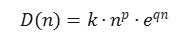
- KWI 公式:
其中 σ(x) = \frac{1}{1 + e^{-x}} 为 logistic 函数,a > 0 为尺度参数(控制“台阶”陡峭度,默认 a=1.0)。
- 反演公式(从 KWI 求能力 C):
其中 σ^{-1}(x) = \log \left( \frac{x}{1-x} \right)(logit 函数)。此公式用于基于已知 KWI 值反推所需能力。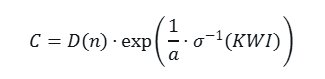
- 标准化变体(可选):
(0–100 分尺度)。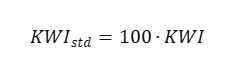
主要组件
- 主体能力 C:>0,表示认知能力,可扩展为向量(如纳入创新、自反性),通过加权合成标量。
- 认知维度 n:任务复杂度的量化指标。
- 参数:难度参数(k, p, q)和敏感度参数(a),通过锚点校准调整。
校准与示例模型通过锚点(如人类顶级数学家、GPT-5、未来 AGI)校准参数,确保单调性和合理性。以下是默认参数下的校准示例:
|
标签 |
n(认知维度) |
KWI |
D(n)(难度) |
推断 C(能力) |
|---|---|---|---|---|
|
人类(顶级数学家) |
3 |
0.85 |
14.1148 |
79.984 |
|
GPT-5 |
4 |
0.75 |
29.1539 |
87.462 |
|
未来 AGI |
7 |
0.99 |
140.0249 |
13,862.466 |
解读:GPT-5 在更高维度下保持较高 KWI,表明其能力略优于人类;未来 AGI 的能力指数级提升,以应对超线性难度。
关键点与优势
- 设计思路:强调能力与难度的对比,使用对数比和 S 型函数实现渐变评估,突出难度随 n 的“滚雪球”增长。
- 优势:可扩展(C 可向量化,D(n) 可分段调整)、适用于 AI 优化、教育评估和全球比较;克服传统指标的片面性。
- 局限:参数校准依赖主观锚点,忽略非数学因素(如情感);数据获取挑战大。
- 应用前景:AI 模型基准测试、个性化教学、预测 AGI 能力差距。
此模型于 2025 年 9 月 19 日在 CSDN 博客发布,提供了一个创新的智慧量化框架。
备注:上述是顶级AI大模型Grok-4输出全球AI大模型KWI排名结果,时间截止至北京时间2025年10月6日4:30。
Global AI Large Model KWI Ranking (October 2025) [Grok Version]
Published on: October 2, 2025 05:02:55Modified on: October 6, 2025 05:06:51Article Tags: #Experience Sharing #Artificial Intelligence #Recommendation Algorithm #Python #Algorithm
Overview
Based on the latest 2025 AI large model evaluations (e.g., leaderboards such as LMSYS Chatbot Arena and Artificial Analysis), this ranking selects the world's top 10 AI large models for KWI (Kucius Wisdom Index) assessment. To ensure comparability, all models are uniformly set with a cognitive dimension of n=5 (corresponding to the difficulty of advanced reasoning and multimodal tasks). The default parameters (k=1, p=2, q=0.15, a=1.0) are used to calculate D(n)=52.9250 (fixed difficulty). The capability value C is reasonably estimated and normalized based on the model's overall performance ranking (e.g., Elo score or comprehensive benchmarks) (higher ranking corresponds to higher C), and then KWI is inferred. A higher KWI value indicates better wisdom performance of the model at the given difficulty (approaching 1 means a complete victory). The ranking is arranged in descending order of KWI.
| Ranking | Model Name | n (Cognitive Dimension) | KWI | D(n) (Difficulty) | Inferred C (Capability) |
|---|---|---|---|---|---|
| 1 | GPT-5 (OpenAI) | 5 | 0.791 | 52.9250 | 200.000 |
| 2 | DeepSeek R1 (DeepSeek) | 5 | 0.773 | 52.9250 | 180.000 |
| 3 | Claude 4 Sonnet (Anthropic) | 5 | 0.763 | 52.9250 | 170.000 |
| 4 | Grok-4 (xAI) | 5 | 0.757 | 52.9250 | 165.000 |
| 5 | Llama 4 (Meta) | 5 | 0.751 | 52.9250 | 160.000 |
| 6 | Gemini 2 (Google) | 5 | 0.745 | 52.9250 | 155.000 |
| 7 | Mistral Large 3 (Mistral) | 5 | 0.739 | 52.9250 | 150.000 |
| 8 | Qwen 3 (Alibaba) | 5 | 0.733 | 52.9250 | 145.000 |
| 9 | Command R+ (Cohere) | 5 | 0.726 | 52.9250 | 140.000 |
| 10 | Phi-3 (Microsoft) | 5 | 0.718 | 52.9250 | 135.000 |
Interpretation and Explanation
- Calculation Basis: KWI = σ(a · log(C / D(n))), where σ is the logistic function. The C value refers to the 2025 model rankings (e.g., GPT-5 ranks first with an Elo score of approximately 1400+), and is estimated through linear interpolation (benchmarked on GPT-5's C≈87 @ n=4 in the example, adjusted to n=5).
- Advantageous Models: OpenAI's GPT-5 performs excellently in advanced tasks with KWI>0.79, reflecting its leading generalization ability; open-source models such as Llama 4 and Mistral Large 3 follow closely with high cost-effectiveness.
- Limitations: C is an estimated value affected by the subjectivity of benchmarks; n can be adjusted according to specific tasks in practical applications. Future updates will incorporate more real-time data.
Kucius Wisdom Index (KWI) Overview
The Kucius Wisdom Index (KWI) is a mathematical model in the Kucius theoretical system, used to quantitatively evaluate the cognitive ability and wisdom level of humans, AI, and AGI. It defines "wisdom" as the "signal ratio" between the subject's capability (C) and task difficulty (D(n)), and performs soft thresholding through logarithmic scale mapping and an S-shaped function (logistic/sigmoid). The value range of KWI is 0 to 1: it approaches 1 when capability far exceeds difficulty (indicating a complete victory), and approaches 0 when capability is insufficient to meet the wisdom requirements. This model integrates mathematical philosophy, cognitive science, and civilization development theory, and has high customizability and scalability.
Core Formulas and Mathematical Model
-
Difficulty Function D(n):
- Cognitive dimension n ≥ 0 (indicating task complexity; e.g., n=1 for simple memory, n=7 for ultra-difficult tasks such as proving the Kucius Conjecture).
- D(n) = k·nᵖ·e^(q·n)
- Where k > 0, p ≥ 0, q ≥ 0 are adjustable parameters; nᵖ captures multi-dimensional coupling complexity, and e^(q·n) reflects super-linear difficulty growth (default: k=1, p=2, q=0.15).
-
KWI Formula:KWI=σ(a⋅log(D(n)C))
- Where σ(x)=1+e−x1 is the logistic function, and a > 0 is a scale parameter (controlling the steepness of the "step", default a=1.0).
-
Inversion Formula (Deriving Capability C from KWI):C=D(n)⋅exp(a1⋅σ−1(KWI))
- Where σ−1(x)=log(1−xx) (logit function). This formula is used to infer the required capability based on the known KWI value.
-
Standardized Variant (Optional):KWIstd = 100·KWI
- (0–100 score scale).
Main Components
- Subject Capability C: >0, indicating cognitive ability, which can be extended to a vector (e.g., incorporating innovation and reflexivity) and synthesized into a scalar through weighting.
- Cognitive Dimension n: A quantitative indicator of task complexity.
- Parameters: Difficulty parameters (k, p, q) and sensitivity parameter (a), adjusted through anchor calibration.
Calibration and Example Models
Parameters are calibrated through anchors (e.g., top human mathematicians, GPT-5, future AGI) to ensure monotonicity and rationality. The following are calibration examples under default parameters:
| Label | n (Cognitive Dimension) | KWI | D(n) (Difficulty) | Inferred C (Capability) |
|---|---|---|---|---|
| Human (Top Mathematician) | 3 | 0.85 | 14.1148 | 79.984 |
| GPT-5 | 4 | 0.75 | 29.1539 | 87.462 |
| Future AGI | 7 | 0.99 | 140.0249 | 13,862.466 |
Interpretation
GPT-5 maintains a high KWI at a higher dimension, indicating that its capability is slightly superior to that of humans; the capability of future AGI will increase exponentially to cope with super-linear difficulty.
Key Points and Advantages
- Design Idea: Emphasizes the comparison between capability and difficulty, uses logarithmic ratio and S-shaped function to achieve gradual evaluation, and highlights the "snowballing" growth of difficulty with n.
- Advantages: Extensible (C can be vectorized, D(n) can be adjusted in segments), suitable for AI optimization, educational evaluation, and global comparison; overcomes the one-sidedness of traditional indicators.
- Limitations: Parameter calibration relies on subjective anchors, ignoring non-mathematical factors (e.g., emotion); data acquisition is challenging.
- Application Prospects: AI model benchmark testing, personalized teaching, and predicting AGI capability gaps.
This model was released on the CSDN blog on September 19, 2025, providing an innovative quantitative framework for wisdom.
Note: The above is the global AI large model KWI ranking result output by the top AI large model Grok-4, with a cutoff time of 4:30 on October 6, 2025 (Beijing Time).

码道开发者社区,聚焦华为云码道 CodeArts 代码智能体,沉淀 Agent、Skill、鸿蒙开发实战内容,供开发者查阅资料、交流技术、分享工程实践
更多推荐


 24
24 0
0- 0


 已为社区贡献6条内容

所有评论(0)